
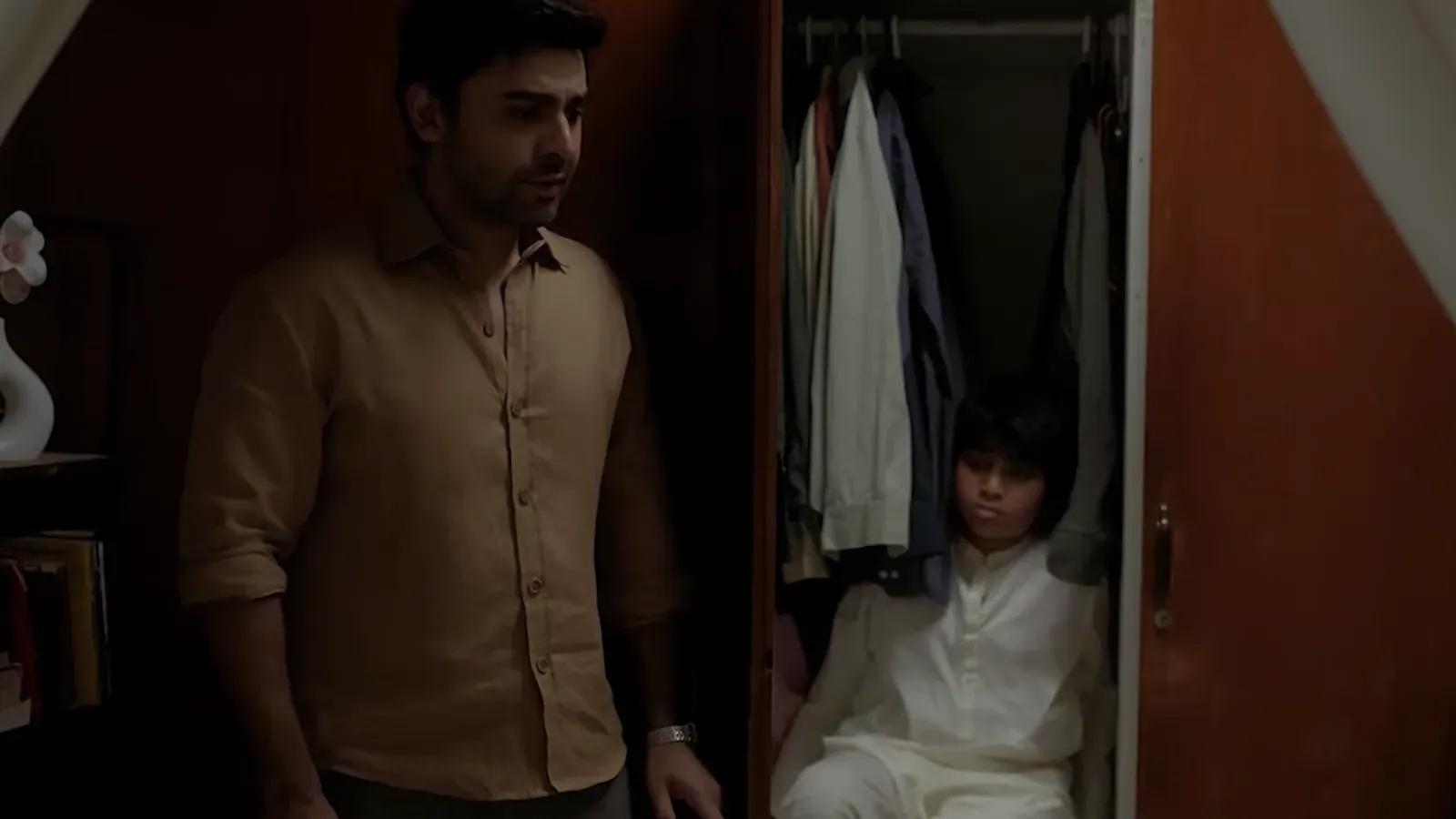
In this powerful scene from Bas Tera Saath Ho, Farhan Saeed’s character, Anas, kneels down to talk directly to a younger version of himself, who is hiding inside a dark wooden closet. On the surface, it looks like a man comforting a scared little boy, but it is actually an inner mental battle. The closet represents the dark, hidden place where we store our scary memories, old fears, and pain from growing up.
Instead of ignoring his past or telling himself to "man up," Anas chooses to look his childhood fears right in the eye. He steps back into his own past to give that scared little boy the safety, love, and protection he never got when he was small. By sitting with his younger self and giving him a big hug, he stops running from his pain and finally begins to heal from the inside out.
The Hidden Fears We Carry from Childhood
A child crouching inside a dark, cramped closet is a strong image of how fear works. When kids grow up in homes filled with fighting, strict pressure, or neglect, they quickly learn that showing their true feelings is dangerous. To keep themselves safe, they build invisible walls around their hearts and hide their real thoughts away, just like hiding in a dark closet.
The problem is that even when a boy grows up into a tall, strong man, that scared little kid remains trapped inside him. He might act confident on the outside, but inside, he is still waiting for the next bad thing to happen. By opening that closet door, Anas shows us that true growth cannot happen until we stop pretending our past never hurt us.
Learning to Be Your Own Protector
The most touching part of this conversation is how the adult version of Anas speaks to his younger self. He does not yell at the boy for being afraid, nor does he tell him to hurry up and stop crying. Instead, he kneels down to look him in the eye, speaks in a gentle voice, and tells him that his feelings make total sense. He explains to the boy that hiding was a smart way to survive back then, but he does not have to hide anymore.
This moment teaches us a vital lesson about dealing with trauma: to heal from old wounds, you have to become the kind, protective figure you needed when you were little. Anas takes full responsibility for his own safety. He promises his younger self that he is strong enough now to shield them both from any future harm, taking the heavy weight of fear off the child's small shoulders.